

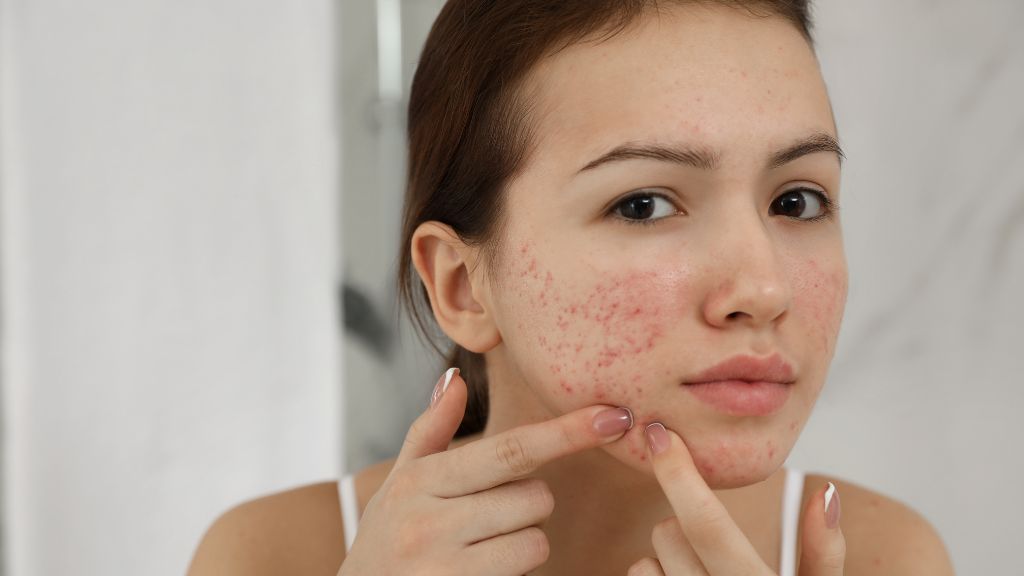


Acne is a common skin condition that occurs when hair follicles become clogged with oil, dead skin cells, and bacteria. It most often appears on the face, chest, back, and shoulders, where sebaceous (oil) glands are more active. The blocked follicles can lead to different types of blemishes, including blackheads, whiteheads, papules, pustules, nodules, and cysts. While acne is most prevalent during adolescence due to hormonal changes, it can affect people of all ages, including adults, especially women during hormonal fluctuations such as menstruation or pregnancy.
The development of acne begins when the skin’s sebaceous glands produce excess sebum, an oily substance that helps protect and lubricate the skin. When too much sebum is produced, it combines with dead skin cells and blocks hair follicles. Bacteria naturally present on the skin can then multiply within these clogged pores, causing inflammation and the formation of spots or pimples. Depending on the severity, acne can range from mild, occasional breakouts to more persistent and painful cystic lesions.
Several factors can contribute to acne, including hormonal changes, genetics, stress, and certain cosmetic products that clog pores. Diet may also play a role, with some evidence suggesting that foods with a high glycaemic index or excessive dairy intake can worsen breakouts in some individuals. Friction or pressure on the skin from clothing, helmets, or masks can also trigger a type of acne known as acne mechanica.