

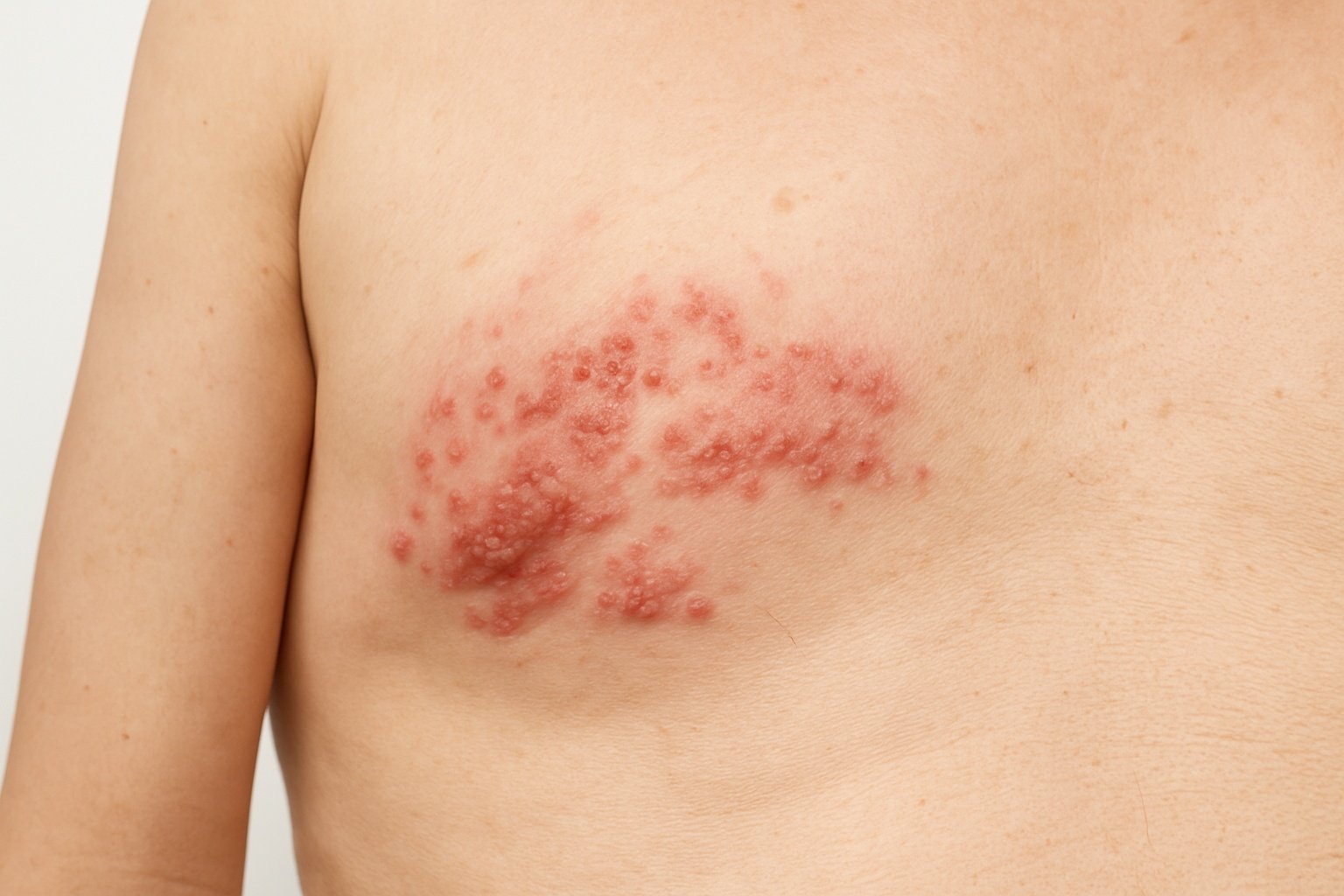



Shingles, also known as herpes zoster, is a painful skin rash caused by the reactivation of the varicella-zoster virus — the same virus that causes chickenpox. After someone recovers from chickenpox, the virus remains dormant in the nerve cells and can reactivate years later as shingles. It most commonly affects older adults or people with weakened immune systems, though it can occur at any age.
The first signs of shingles often include tingling, burning, or itching in one area of the body, usually on one side. Within a few days, a red rash appears and develops into clusters of fluid-filled blisters. These blisters eventually dry out and form scabs over several weeks. The rash often wraps around one side of the torso but can also appear on the face, neck, or other areas.
The pain associated with shingles can be intense and may continue even after the rash heals — a complication known as postherpetic neuralgia. Other symptoms can include fever, fatigue, and sensitivity to light. In some cases, if the rash appears near the eyes, it can cause vision problems and requires immediate medical attention.